Skip links

Behavioral & Functional Phenotyping

Comprehensive Behavioral & Functional Package

Comprehensive behavioral and functional assessment across in vivo disease models

This matrix represents a comprehensive, multi-layered framework for behavioral and functional assessment in in vivo studies, designed to capture disease-relevant functional outcomes and therapeutic responses with high scientific rigor. Rather than relying on isolated tests, it integrates a systematic, decision-oriented set of behavioral, motor, cognitive, sensory, metabolic, and physiological readouts, directly aligned with disease mechanisms, drug classes, and preclinical study objectives. The categorization follows internationally accepted standards in neuroscience, pharmacology, and translational research, enabling targeted module selection based on the specific disease model, underlying biological pathways, and scientific questions of each project. The matrix is built to deliver interpretable, reproducible, and defensible data, supporting critical preclinical decisions including efficacy evaluation, safety assessment, go / no-go strategy, scientific publication, and regulatory-facing development pathways.

Send a Message

Request a Call Back

    1

    General Activity, Locomotion & Exploratory Behavior

    Baseline activity levels, locomotion patterns, and exploratory responses

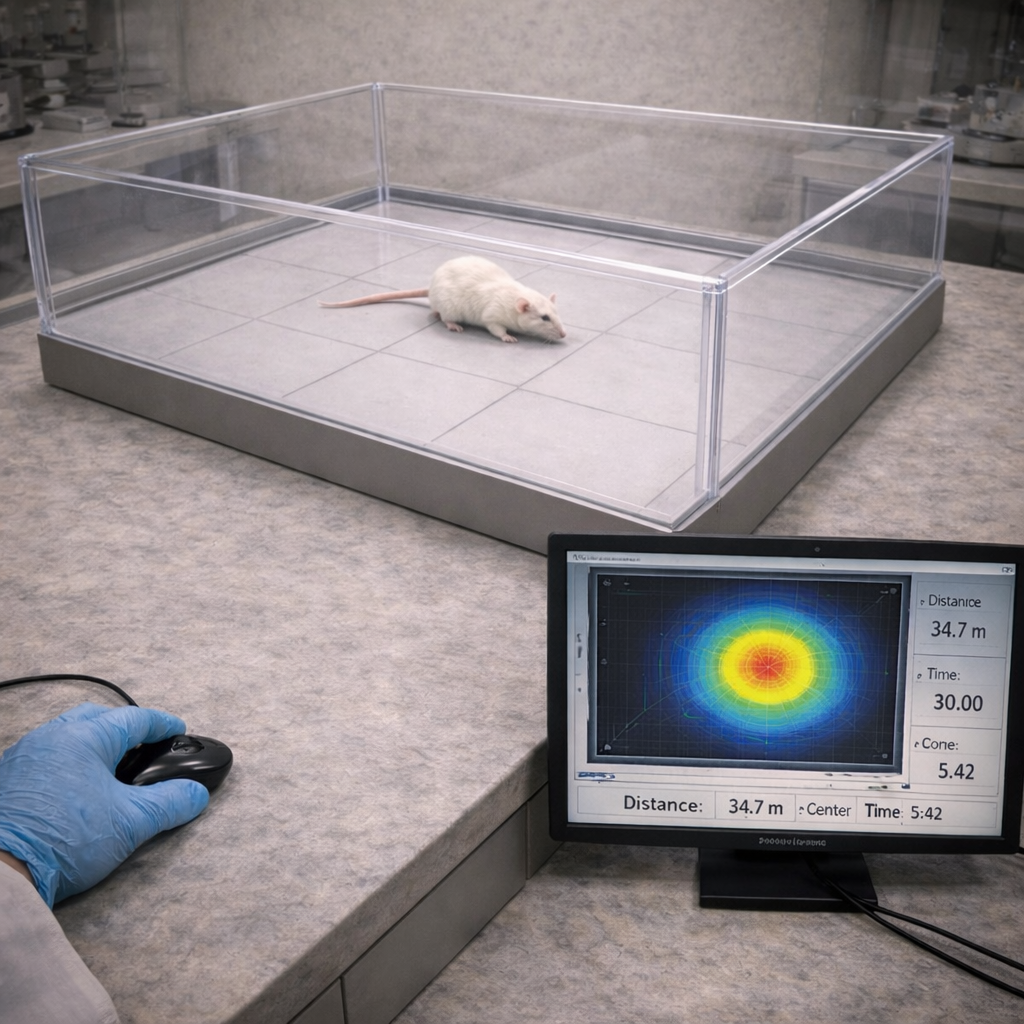
    This module provides a comprehensive assessment of baseline activity, locomotion patterns, and exploratory behavior in preclinical models. By quantifying spontaneous movement and exploration, it enables early detection of neurological, metabolic, or drug-induced effects. These parameters form the foundation for accurate interpretation of advanced behavioral and functional assays. Proper evaluation at this level ensures scientific validity and translational relevance of all downstream analyses.

    Tests :

    • Open Field Test (OFT)
    • Home Cage Activity Monitoring
    • Locomotor Activity Box (Infrared Beam Break)
    • Rearing & Grooming Behavioral Scoring

    This module provides a comprehensive assessment of baseline activity, locomotion patterns, and exploratory behavior in preclinical models. By quantifying spontaneous movement and exploration, it enables early detection of neurological, metabolic, or drug-induced effects. These parameters form the foundation for accurate interpretation of advanced behavioral and functional assays. Proper evaluation at this level ensures scientific validity and translational relevance of all downstream analyses.

    Tests :

    • Open Field Test (OFT)
    • Home Cage Activity Monitoring
    • Locomotor Activity Box (Infrared Beam Break)
    • Rearing & Grooming Behavioral Scoring

    2

    Anxiety-Like Behavior

    Anxiety-related risk assessment and avoidance behavior

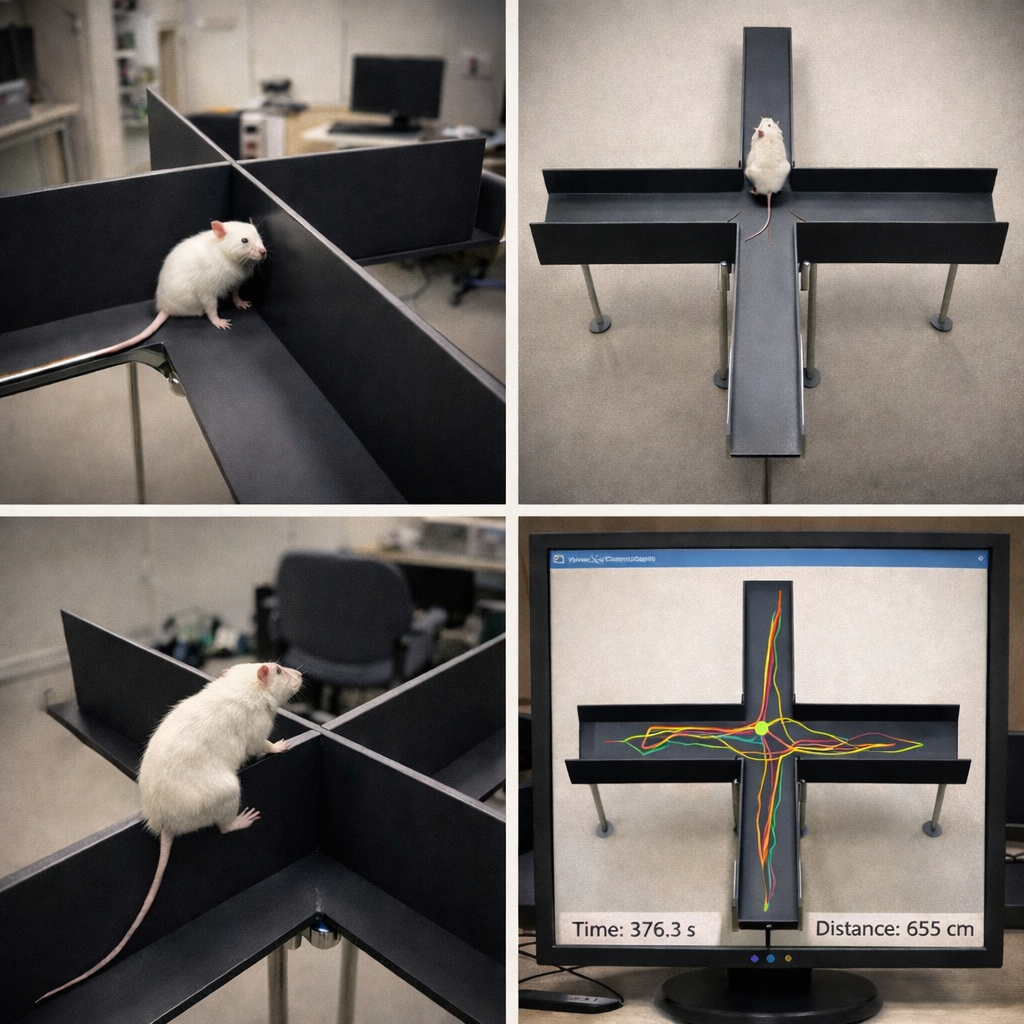
    This module evaluates anxiety-related risk assessment and avoidance behavior using well-validated preclinical paradigms. By quantifying exploratory patterns, risk–avoidance decisions, and stress-induced behavioral shifts, it enables sensitive detection of anxiolytic or anxiogenic effects. These readouts are essential for CNS drug development, neurobehavioral safety, and translational anxiety research. The resulting data provide robust, reproducible endpoints aligned with regulatory expectations for behavioral pharmacology.

    Tests:

    • Elevated Plus Maze (EPM)
    • Elevated Zero Maze
    • Light–Dark Box Test
    • Open Field Center Time (Thigmotaxis Analysis)
    • Novelty-Suppressed Feeding (NSF) Test

    This module evaluates anxiety-related risk assessment and avoidance behavior using well-validated preclinical paradigms. By quantifying exploratory patterns, risk–avoidance decisions, and stress-induced behavioral shifts, it enables sensitive detection of anxiolytic or anxiogenic effects. These readouts are essential for CNS drug development, neurobehavioral safety, and translational anxiety research. The resulting data provide robust, reproducible endpoints aligned with regulatory expectations for behavioral pharmacology.

    Tests:

    • Elevated Plus Maze (EPM)
    • Elevated Zero Maze
    • Light–Dark Box Test
    • Open Field Center Time (Thigmotaxis Analysis)
    • Novelty-Suppressed Feeding (NSF) Test

    3

    Depression-Like Behavior & Motivation

    Affective state, motivation, and reward sensitivity

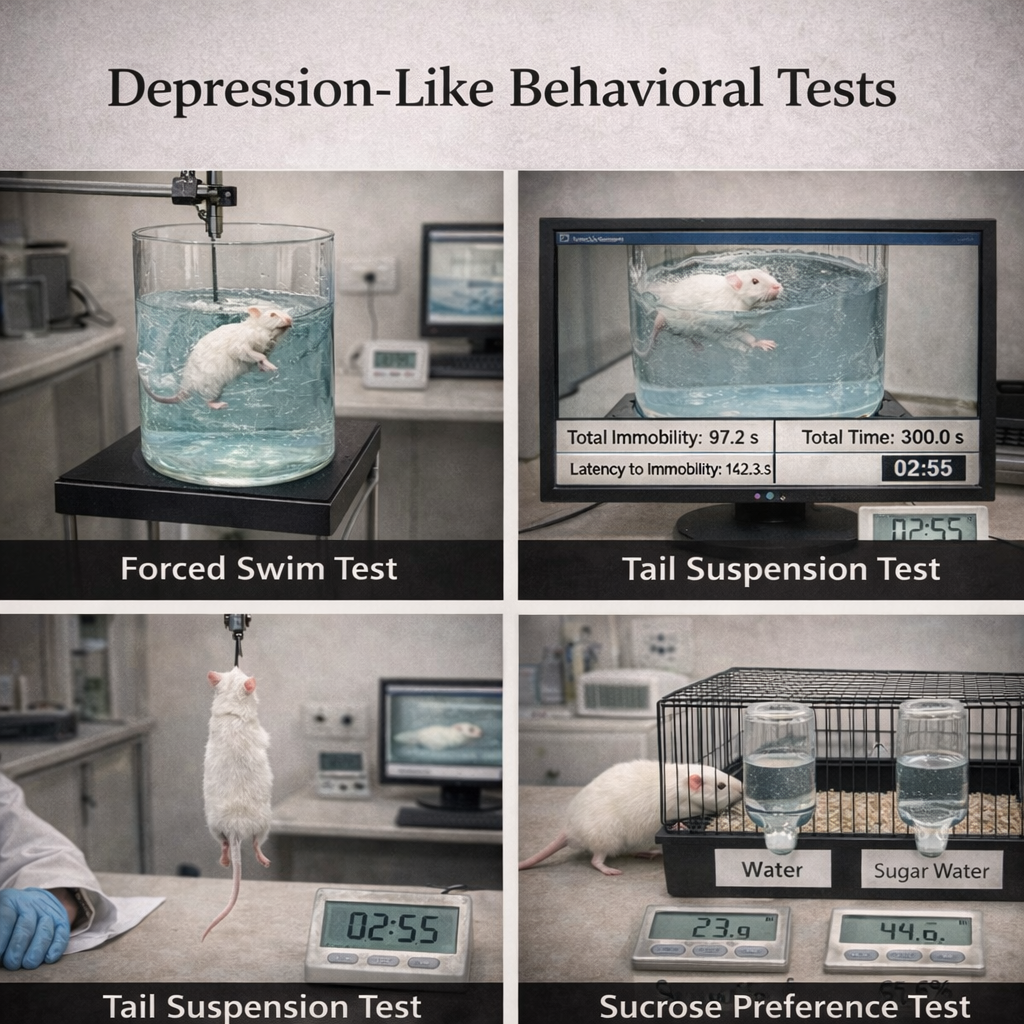
    This module evaluates affective state, motivation, and reward sensitivity in preclinical models of depression. By integrating validated behavioral paradigms, it enables early detection of anhedonia, behavioral despair, and motivational deficits. These assays are critical for antidepressant screening and neuropsychopharmacology studies. The results provide high translational value for mood-related therapeutic development.

    Tests:

    • Forced Swim Test (FST)
    • Tail Suspension Test (TST)
    • Sucrose Preference Test
    • Novelty-Induced Hypophagia (NIH)

    This module evaluates affective state, motivation, and reward sensitivity in preclinical models of depression. By integrating validated behavioral paradigms, it enables early detection of anhedonia, behavioral despair, and motivational deficits. These assays are critical for antidepressant screening and neuropsychopharmacology studies. The results provide high translational value for mood-related therapeutic development.

    Tests:

    • Forced Swim Test (FST)
    • Tail Suspension Test (TST)
    • Sucrose Preference Test
    • Novelty-Induced Hypophagia (NIH)

    4

    Learning, Memory & Cognition

    Spatial, associative, and recognition memory performance

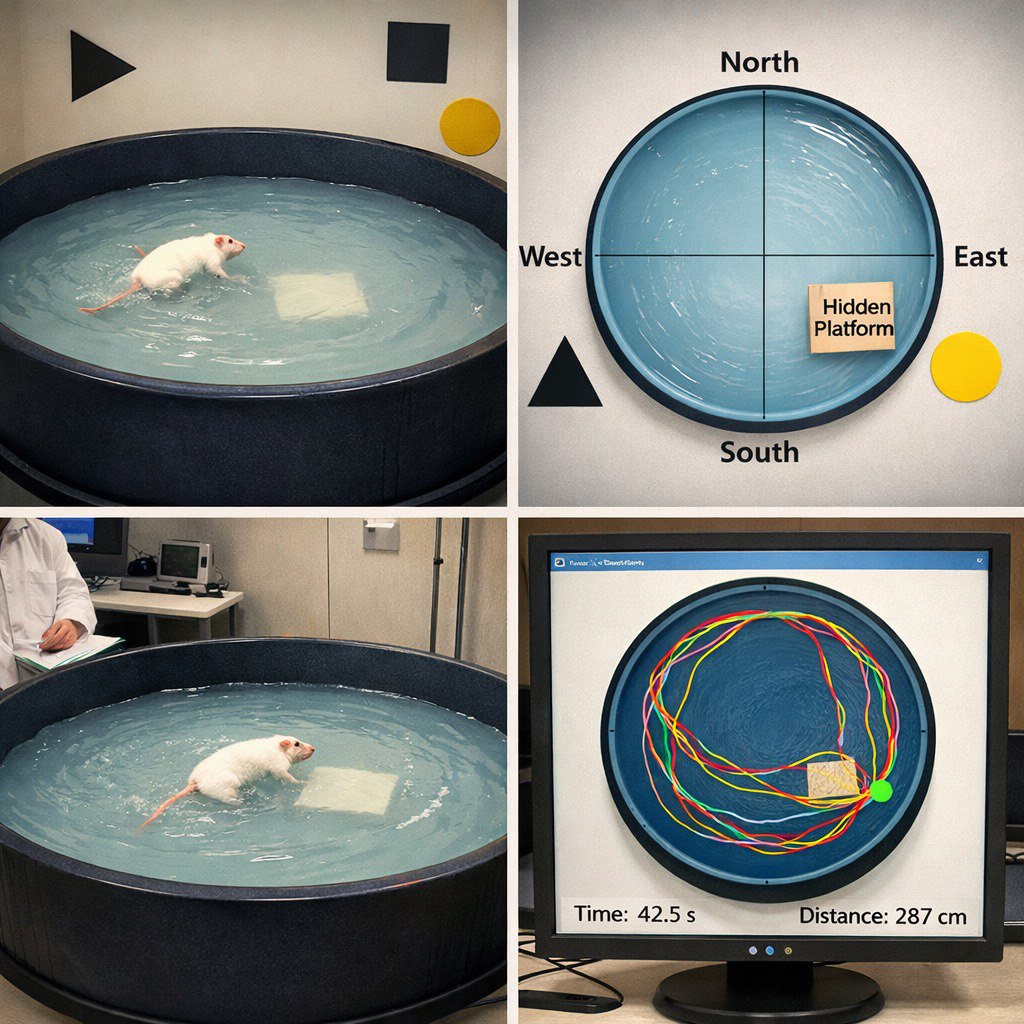
    This module provides an advanced evaluation of learning, memory, and cognitive performance across spatial, associative, and recognition domains. Using well-established behavioral paradigms, it detects subtle cognitive impairments and hippocampal- and cortical-dependent memory deficits. These assays are essential for neuroscience, Alzheimer’s disease, dementia, and cognitive-enhancement studies. The generated data offer strong translational relevance for brain function and therapeutic efficacy assessment.

    Tests:

    • Morris Water Maze (MWM)
    • Barnes Maze
    • Y-Maze Spontaneous Alternation
    • T-Maze (Alternation / Discrimination)
    • Radial Arm Maze (RAM)
    • Novel Object Recognition (NOR)
    • Object Location Memory Test
    • Passive Avoidance Test
    • Fear Conditioning (Contextual & Cued)

    This module provides an advanced evaluation of learning, memory, and cognitive performance across spatial, associative, and recognition domains. Using well-established behavioral paradigms, it detects subtle cognitive impairments and hippocampal- and cortical-dependent memory deficits. These assays are essential for neuroscience, Alzheimer’s disease, dementia, and cognitive-enhancement studies. The generated data offer strong translational relevance for brain function and therapeutic efficacy assessment.

    Tests:

    • Morris Water Maze (MWM)
    • Barnes Maze
    • Y-Maze Spontaneous Alternation
    • T-Maze (Alternation / Discrimination)
    • Radial Arm Maze (RAM)
    • Novel Object Recognition (NOR)
    • Object Location Memory Test
    • Passive Avoidance Test
    • Fear Conditioning (Contextual & Cued)

    5

    Motor Function, Strength & Coordination

    Motor control, balance, strength, and coordination

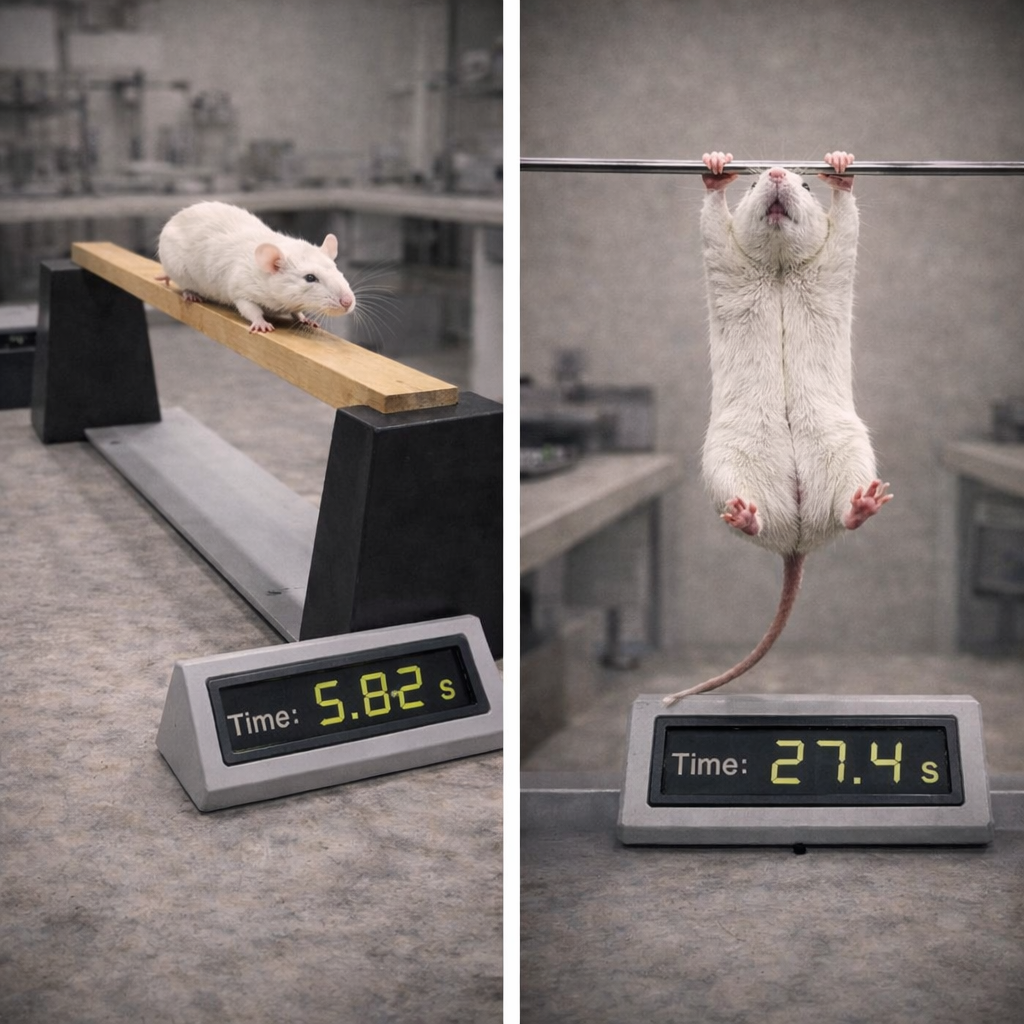
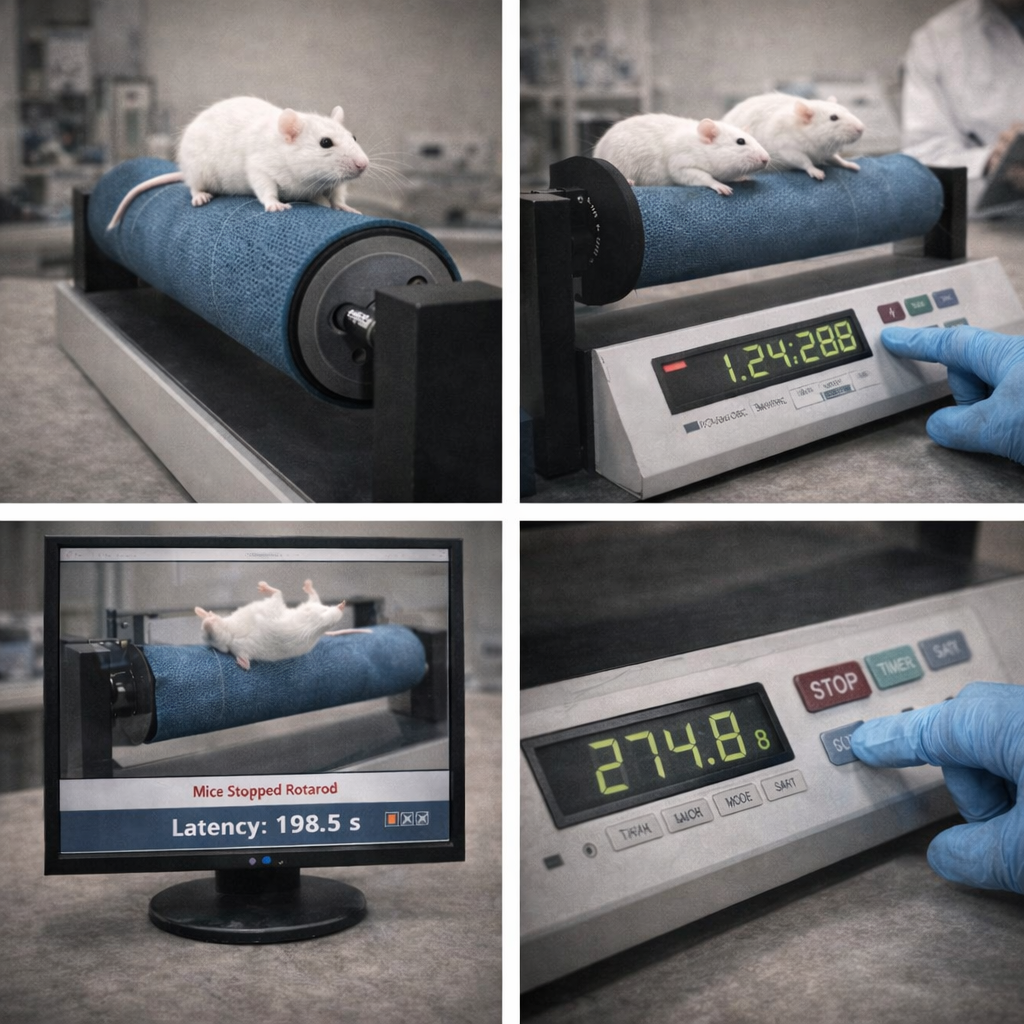
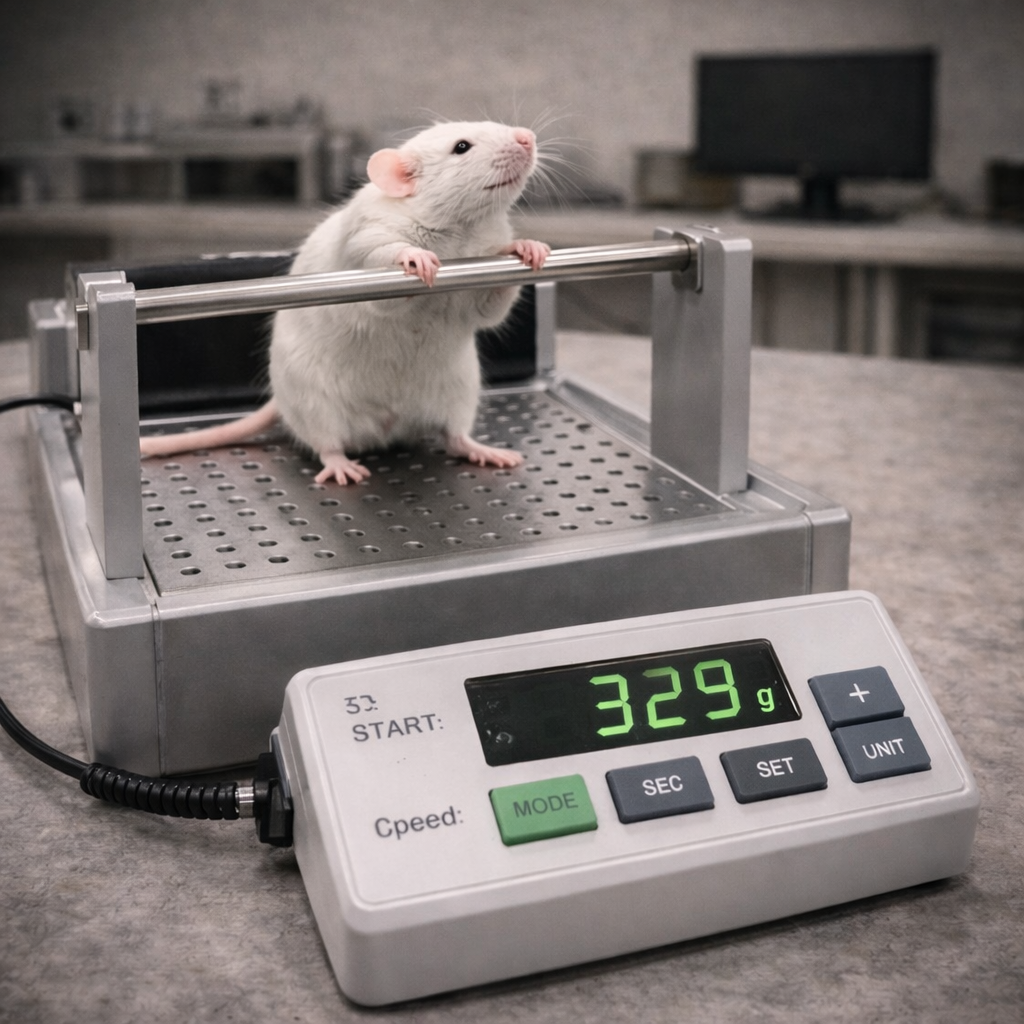
    This module delivers a comprehensive assessment of motor control, balance, muscle strength, and neuromuscular coordination. By applying validated motor performance assays, it detects subtle motor deficits, limb asymmetry, and coordination impairments. These tests are essential for studies on neurodegenerative disorders, spinal cord injury, stroke, and neuromuscular diseases. The outcomes provide robust functional endpoints with high translational value.

    Tests:

    • Rotarod Test
    • Balance Beam Test
    • Gait Analysis (CatWalk / Footprint Analysis)
    • Grip Strength Test
    • Wire Hang / Inverted Screen Test
    • Cylinder Test (Forelimb Use Asymmetry)
    • Ladder Rung Walking Test

    This module delivers a comprehensive assessment of motor control, balance, muscle strength, and neuromuscular coordination. By applying validated motor performance assays, it detects subtle motor deficits, limb asymmetry, and coordination impairments. These tests are essential for studies on neurodegenerative disorders, spinal cord injury, stroke, and neuromuscular diseases. The outcomes provide robust functional endpoints with high translational value.

    Tests:

    • Rotarod Test
    • Balance Beam Test
    • Gait Analysis (CatWalk / Footprint Analysis)
    • Grip Strength Test
    • Wire Hang / Inverted Screen Test
    • Cylinder Test (Forelimb Use Asymmetry)
    • Ladder Rung Walking Test

    6

    Sensorimotor Integration & Reflexes

    Sensorimotor processing and reflex integrity

    This module evaluates sensorimotor integration and reflex integrity as fundamental indicators of nervous system function. Using standardized reflex and sensory processing assays, it enables early detection of neural pathway dysfunctions and sensory–motor deficits. These tests are essential for neurodevelopmental, neurodegenerative, and neurotoxicity studies. The generated data provide objective and highly translational functional endpoints.

    Tests:

    • Startle Response & Prepulse Inhibition (PPI)
    • Righting Reflex
    • Placing / Stepping Reflexes
    • Adhesive Removal (Tape Removal) Test
    • Hot Plate Latency

    This module evaluates sensorimotor integration and reflex integrity as fundamental indicators of nervous system function. Using standardized reflex and sensory processing assays, it enables early detection of neural pathway dysfunctions and sensory–motor deficits. These tests are essential for neurodevelopmental, neurodegenerative, and neurotoxicity studies. The generated data provide objective and highly translational functional endpoints.

    Tests:

    • Startle Response & Prepulse Inhibition (PPI)
    • Righting Reflex
    • Placing / Stepping Reflexes
    • Adhesive Removal (Tape Removal) Test
    • Hot Plate Latency

    7

    Pain & Nociception

    Thermal, mechanical, inflammatory, and neuropathic pain responses

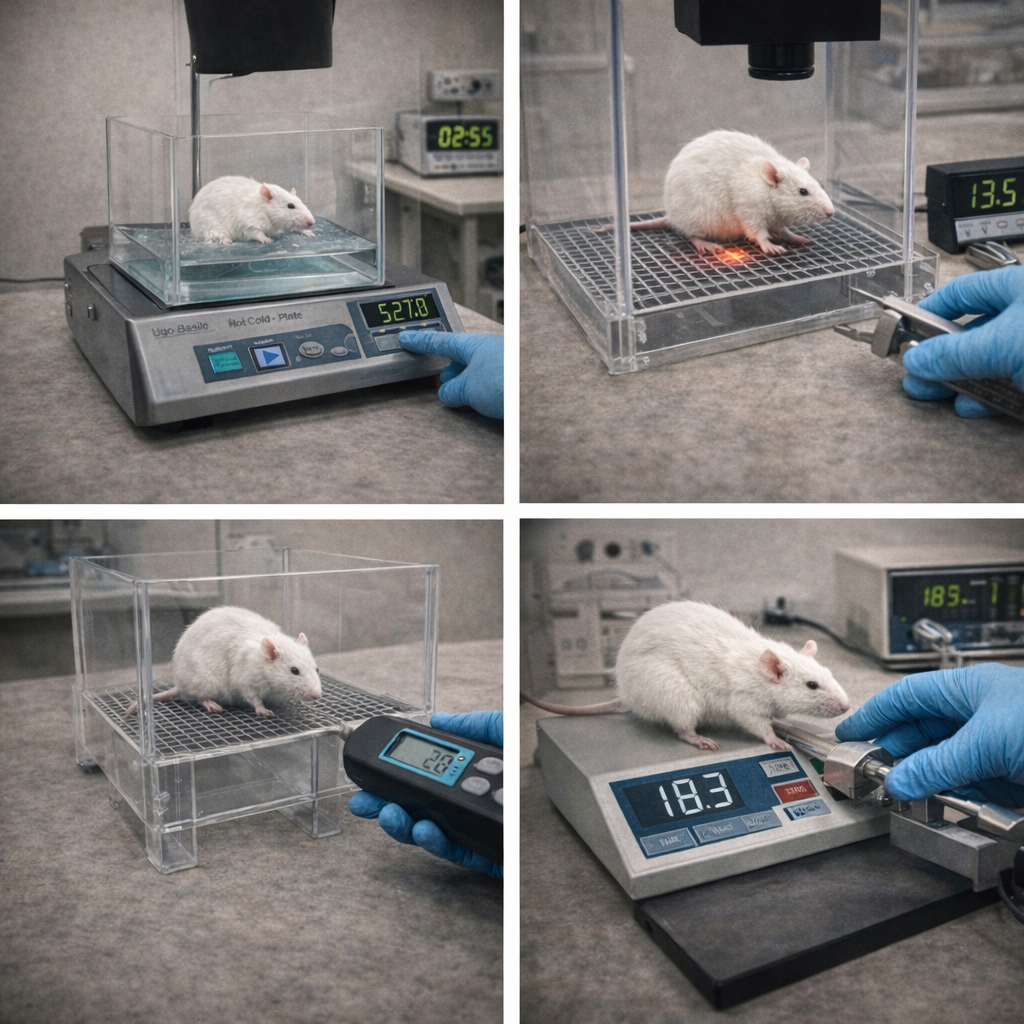
    This module provides a comprehensive assessment of thermal, mechanical, inflammatory, and neuropathic pain responses in preclinical models. By quantifying pain thresholds, hypersensitivity, and nociceptive pathway alterations, it enables precise evaluation of analgesic and anti-inflammatory interventions. These assays are essential for neuropathic pain research and drug efficacy testing. The resulting data offer robust, translational pain-related endpoints.

    Tests:

    • Hot Plate Test
    • Tail Flick Test
    • Von Frey Filament Test
    • Hargreaves Test
    • Formalin Test
    • Acetic Acid Writhing Test
    • Neuropathic Pain Behavioral Assays
      • Mechanical Allodynia
      • Thermal Hyperalgesia
      • Cold Allodynia

    This module provides a comprehensive assessment of thermal, mechanical, inflammatory, and neuropathic pain responses in preclinical models. By quantifying pain thresholds, hypersensitivity, and nociceptive pathway alterations, it enables precise evaluation of analgesic and anti-inflammatory interventions. These assays are essential for neuropathic pain research and drug efficacy testing. The resulting data offer robust, translational pain-related endpoints.

    Tests:

    • Hot Plate Test
    • Tail Flick Test
    • Von Frey Filament Test
    • Hargreaves Test
    • Formalin Test
    • Acetic Acid Writhing Test
    • Neuropathic Pain Behavioral Assays
      • Mechanical Allodynia
      • Thermal Hyperalgesia
      • Cold Allodynia

    8

    Seizure & Epilepsy-Related Behavioral Readouts

    Seizure susceptibility, severity, and temporal characteristics

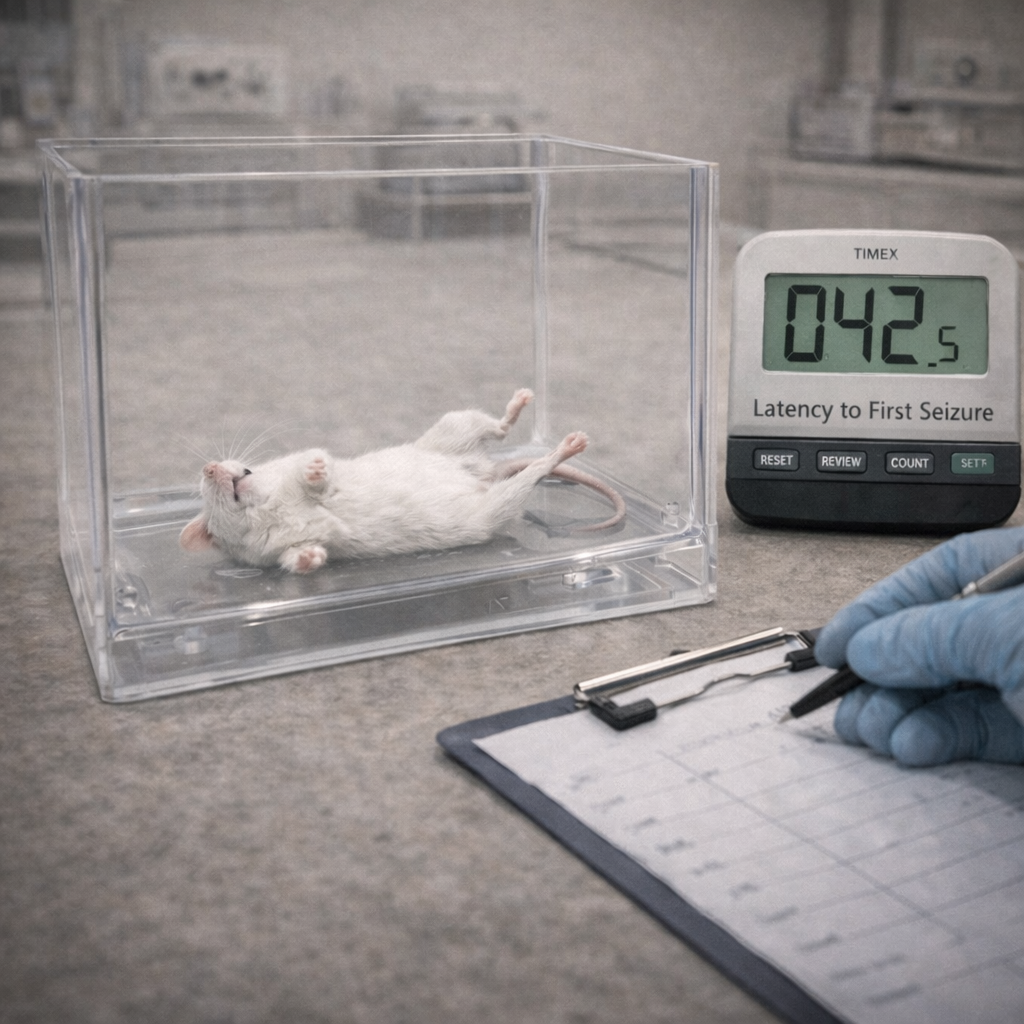
    This module assesses seizure susceptibility, severity, and temporal dynamics using standardized behavioral and EEG-coupled paradigms. By integrating seizure scoring, latency measurements, and frequency–duration monitoring, it enables precise characterization of epileptic phenotypes. These readouts are essential for epilepsy research, anticonvulsant drug screening, and neuro-safety evaluation. The generated data provide highly reliable and translational seizure-related endpoints.

    Tests:

    • Racine Seizure Scoring System
    • Latency to First Seizure
    • Seizure Frequency & Duration Monitoring
    • Video-EEG–Coupled Behavioral Scoring

    This module assesses seizure susceptibility, severity, and temporal dynamics using standardized behavioral and EEG-coupled paradigms. By integrating seizure scoring, latency measurements, and frequency–duration monitoring, it enables precise characterization of epileptic phenotypes. These readouts are essential for epilepsy research, anticonvulsant drug screening, and neuro-safety evaluation. The generated data provide highly reliable and translational seizure-related endpoints.

    Tests:

    • Racine Seizure Scoring System
    • Latency to First Seizure
    • Seizure Frequency & Duration Monitoring
    • Video-EEG–Coupled Behavioral Scoring

    9

    Sleep & Circadian Rhythm

    Sleep architecture and circadian activity regulation

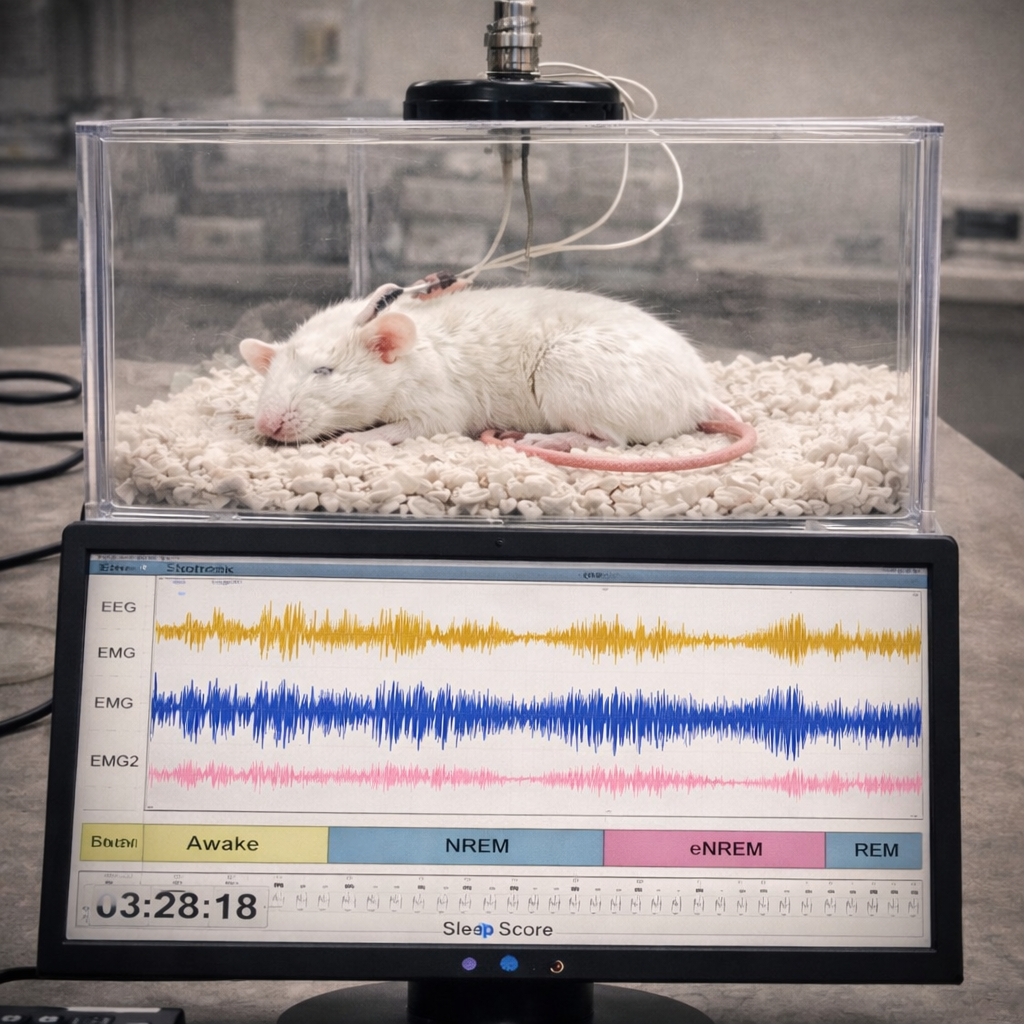
    This module provides detailed assessment of sleep architecture and circadian rhythm regulation using EEG/EMG-based scoring and activity monitoring. By analyzing sleep stages, latency, and sleep–wake fragmentation, it enables precise identification of sleep and circadian disturbances. These assays are essential for neurological, psychiatric, and metabolic research, as well as sleep-related drug evaluation. The resulting data offer strong translational relevance for circadian biology and sleep medicine.

    Tests:

    • EEG/EMG-Based Sleep Scoring (NREM / REM / Wake)
    • Activity–Rest Cycle Monitoring (Actigraphy)
    • Sleep Latency Test
    • Sleep/Wake Fragmentation Analysis

    This module provides detailed assessment of sleep architecture and circadian rhythm regulation using EEG/EMG-based scoring and activity monitoring. By analyzing sleep stages, latency, and sleep–wake fragmentation, it enables precise identification of sleep and circadian disturbances. These assays are essential for neurological, psychiatric, and metabolic research, as well as sleep-related drug evaluation. The resulting data offer strong translational relevance for circadian biology and sleep medicine.

    Tests:

    • EEG/EMG-Based Sleep Scoring (NREM / REM / Wake)
    • Activity–Rest Cycle Monitoring (Actigraphy)
    • Sleep Latency Test
    • Sleep/Wake Fragmentation Analysis

    10

    Social Behavior & Communication

    Social interaction, dominance, and communication patterns

    This module evaluates social interaction, dominance, and communication patterns as core indicators of social and neural function. By applying validated social behavior paradigms and ultrasonic vocalization analysis, it enables precise detection of social deficits and communication abnormalities. These assays are essential for autism spectrum disorder, neurodevelopmental, and psychiatric research. The generated data provide highly translational endpoints for social behavior phenotyping.

    Tests:

    • Three-Chamber Social Interaction Test
    • Social Approach / Social Avoidance Test
    • Resident–Intruder Test
    • Ultrasonic Vocalization (USV) Recording

    This module evaluates social interaction, dominance, and communication patterns as core indicators of social and neural function. By applying validated social behavior paradigms and ultrasonic vocalization analysis, it enables precise detection of social deficits and communication abnormalities. These assays are essential for autism spectrum disorder, neurodevelopmental, and psychiatric research. The generated data provide highly translational endpoints for social behavior phenotyping.

    Tests:

    • Three-Chamber Social Interaction Test
    • Social Approach / Social Avoidance Test
    • Resident–Intruder Test
    • Ultrasonic Vocalization (USV) Recording

    11

    Reward, Addiction & Motivation

    Reinforcement learning and substance-related behavior

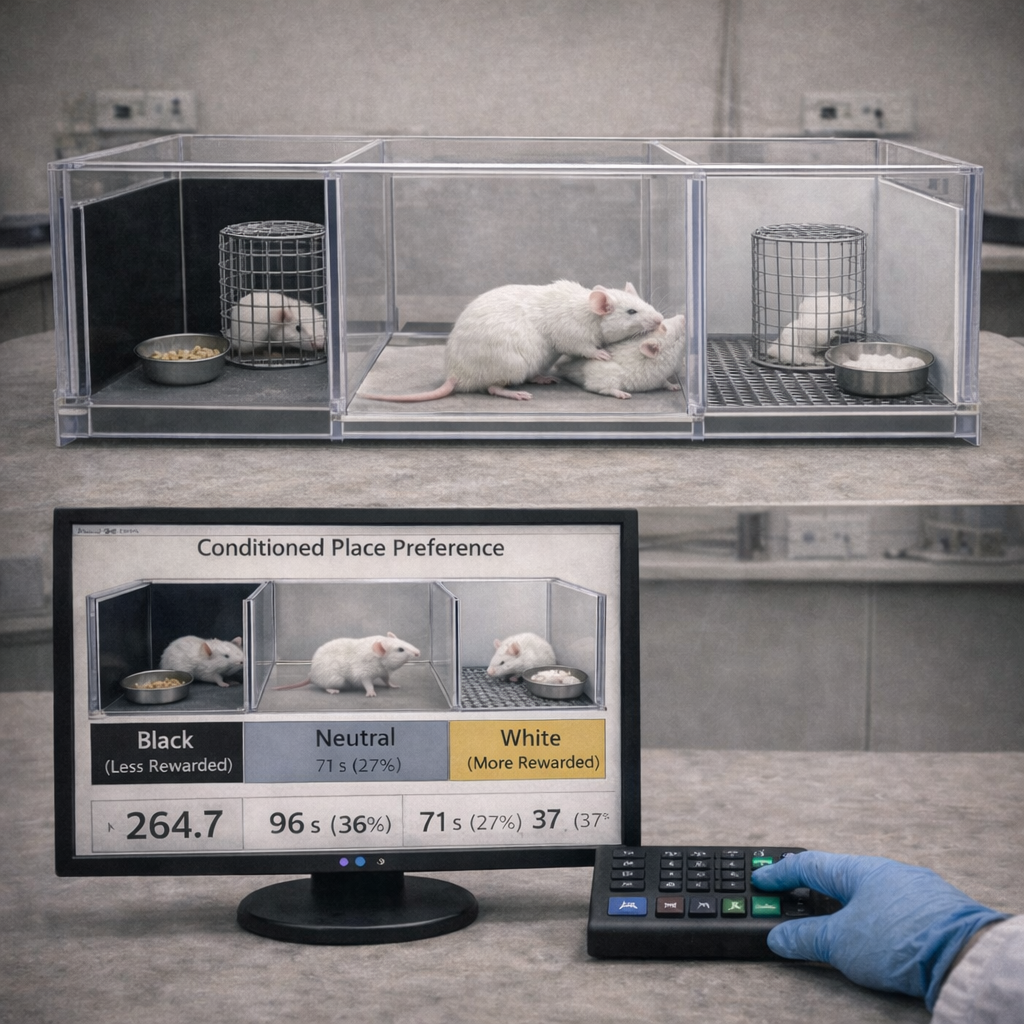
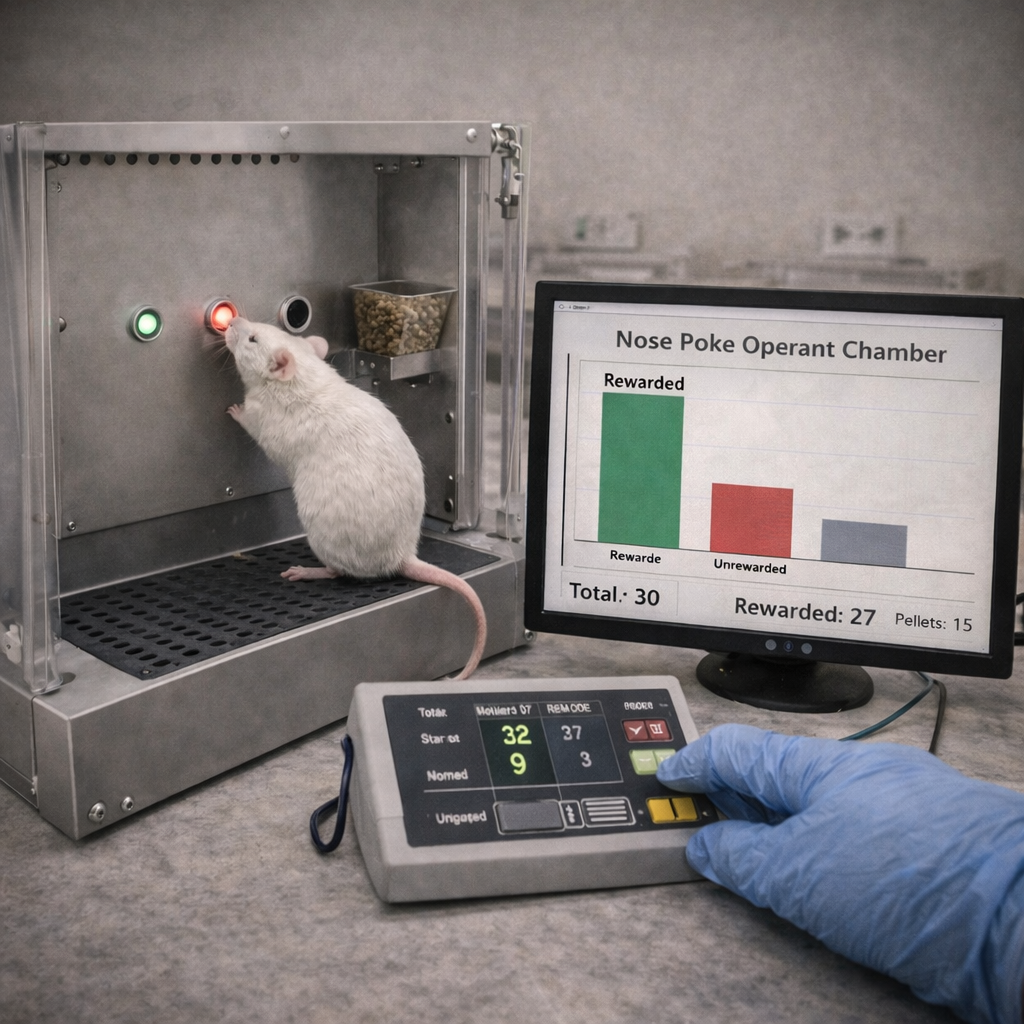
    This module assesses reinforcement learning, motivation, and substance-related behaviors using validated operant and reward-based paradigms. By quantifying reward sensitivity, drug-seeking behavior, and motivational drive, it enables precise characterization of addiction-related phenotypes. These assays are essential for addiction neuroscience and anti-addictive drug development. The resulting data provide robust and highly translational reward-related endpoints.

    Tests:

    • Conditioned Place Preference (CPP)
    • Self-Administration (Operant Drug Intake)
    • Progressive Ratio Schedule
    • Operant Conditioning (Lever Press / Nose Poke)

    This module assesses reinforcement learning, motivation, and substance-related behaviors using validated operant and reward-based paradigms. By quantifying reward sensitivity, drug-seeking behavior, and motivational drive, it enables precise characterization of addiction-related phenotypes. These assays are essential for addiction neuroscience and anti-addictive drug development. The resulting data provide robust and highly translational reward-related endpoints.

    Tests:

    • Conditioned Place Preference (CPP)
    • Self-Administration (Operant Drug Intake)
    • Progressive Ratio Schedule
    • Operant Conditioning (Lever Press / Nose Poke)

    12

    Fatigue, Endurance & Exercise Capacity

    Physical endurance and fatigue resistance

    This module evaluates physical endurance, fatigue resistance, and exercise capacity using standardized performance-based assays. By measuring exhaustion thresholds, voluntary activity, and fatigue-related strength decline, it enables precise assessment of functional performance. These tests are essential for metabolic, neuromuscular, and performance-enhancement research. The resulting data provide strong translational endpoints for endurance and fatigue studies.

    Tests:

    • Treadmill Exhaustion Test
    • Voluntary Wheel Running
    • Grip Strength Fatigue Protocols

    This module evaluates physical endurance, fatigue resistance, and exercise capacity using standardized performance-based assays. By measuring exhaustion thresholds, voluntary activity, and fatigue-related strength decline, it enables precise assessment of functional performance. These tests are essential for metabolic, neuromuscular, and performance-enhancement research. The resulting data provide strong translational endpoints for endurance and fatigue studies.

    Tests:

    • Treadmill Exhaustion Test
    • Voluntary Wheel Running
    • Grip Strength Fatigue Protocols

    13

    Gastrointestinal & Feeding Behavior

    Feeding patterns, appetite regulation, and GI function

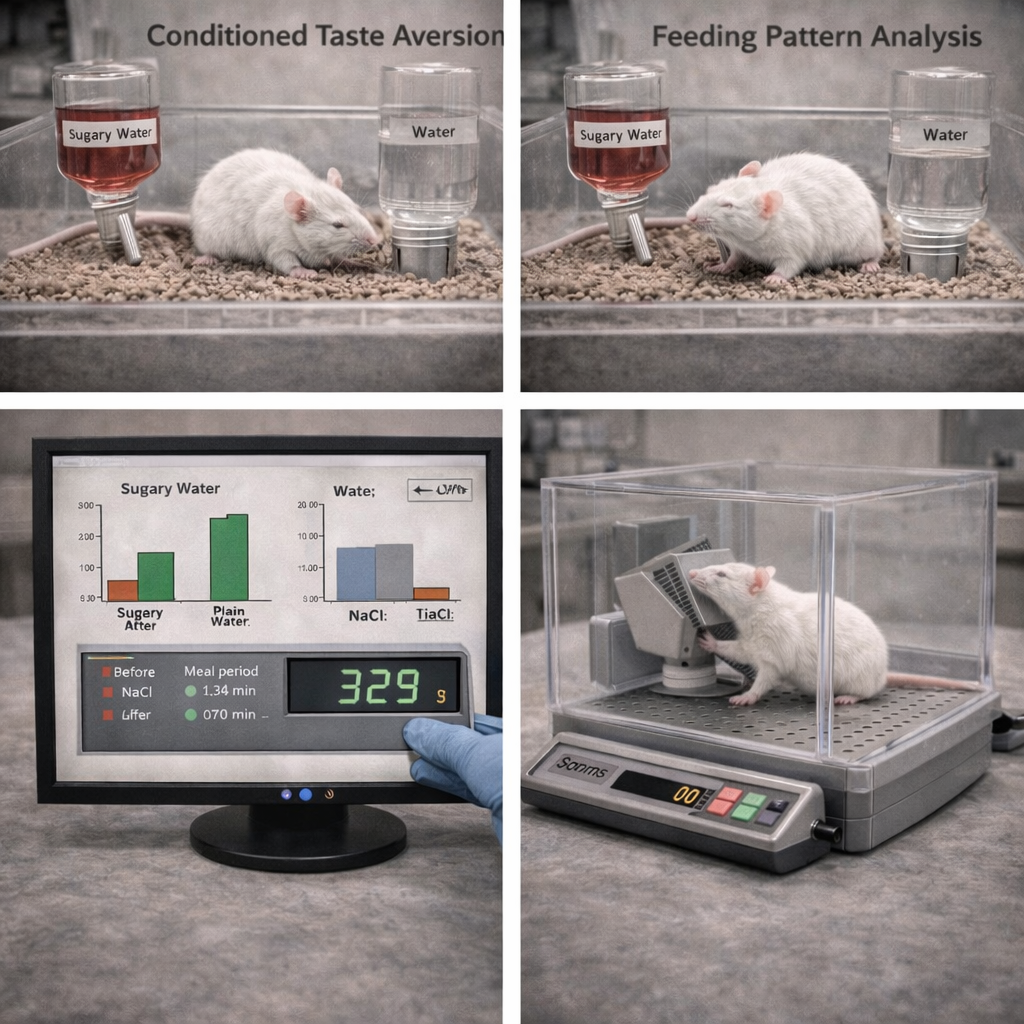
    This module provides integrated assessment of feeding behavior, appetite regulation, and gastrointestinal function in preclinical models. By analyzing food intake, meal patterns, taste aversion, and GI transit, it enables precise detection of metabolic and gastrointestinal disturbances. These assays are essential for metabolic, digestive, and appetite-modulating drug studies. The resulting data offer highly translational endpoints for GI and feeding-related research.

    Tests:

    • Food Intake Monitoring (24 h, Fast–Refeed)
    • Meal Pattern Analysis (Frequency / Size)
    • Conditioned Taste Aversion
    • GI Transit Test (Charcoal Meal / Dye)
    • Pica Behavior (Kaolin Intake)

    This module provides integrated assessment of feeding behavior, appetite regulation, and gastrointestinal function in preclinical models. By analyzing food intake, meal patterns, taste aversion, and GI transit, it enables precise detection of metabolic and gastrointestinal disturbances. These assays are essential for metabolic, digestive, and appetite-modulating drug studies. The resulting data offer highly translational endpoints for GI and feeding-related research.

    Tests:

    • Food Intake Monitoring (24 h, Fast–Refeed)
    • Meal Pattern Analysis (Frequency / Size)
    • Conditioned Taste Aversion
    • GI Transit Test (Charcoal Meal / Dye)
    • Pica Behavior (Kaolin Intake)

    14

    Metabolic & Energy Balance Functional Readouts

    Energy expenditure, metabolism, and body composition

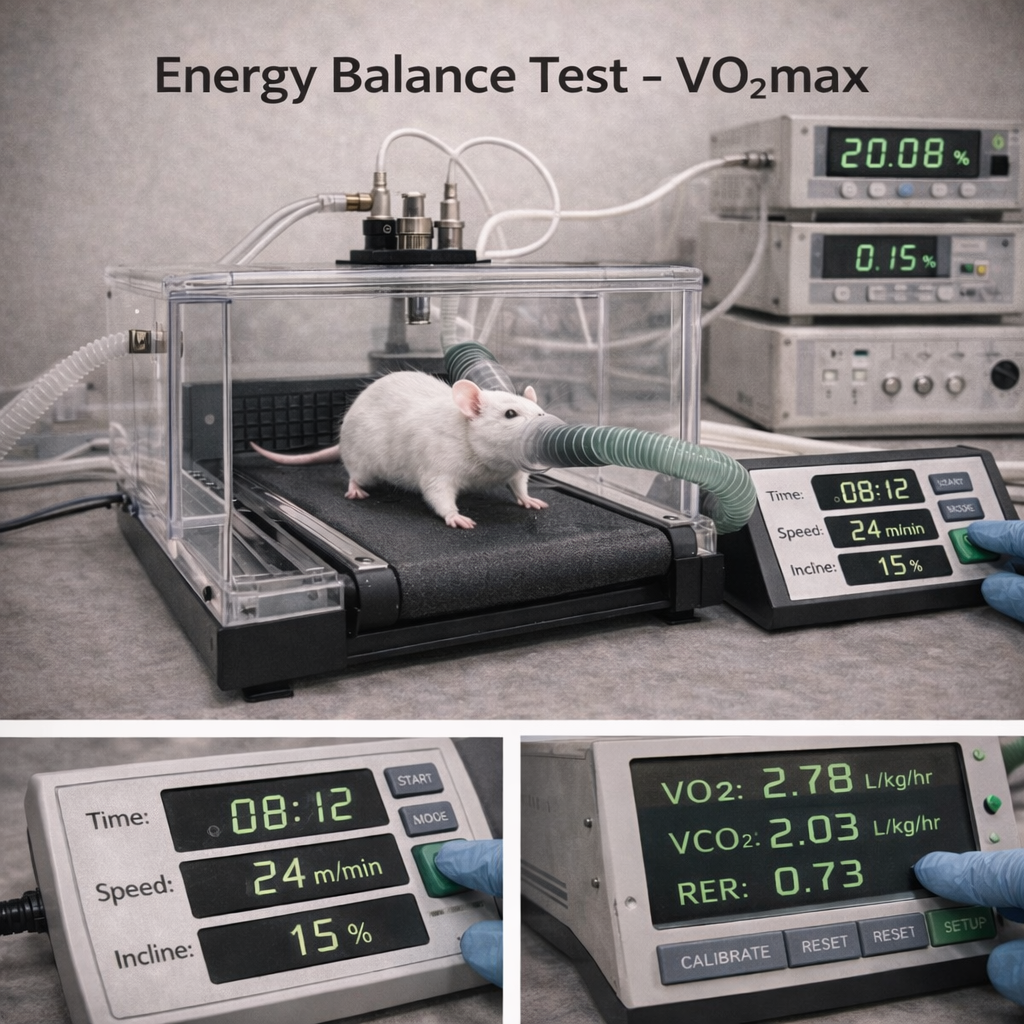
    This module delivers comprehensive assessment of energy expenditure, metabolic rate, and body composition using advanced metabolic phenotyping tools. By integrating indirect calorimetry with activity, food intake, and body composition analysis, it enables precise evaluation of energy balance. These assays are essential for obesity, diabetes, and metabolic disorder research. The generated data provide robust and highly translational metabolic endpoints.

    Tests:

    • Indirect Calorimetry (VO₂, VCO₂, RER)
    • Integrated Activity, Food Intake & Energy Expenditure
    • Body Composition Analysis (DEXA / NMR)

    This module delivers comprehensive assessment of energy expenditure, metabolic rate, and body composition using advanced metabolic phenotyping tools. By integrating indirect calorimetry with activity, food intake, and body composition analysis, it enables precise evaluation of energy balance. These assays are essential for obesity, diabetes, and metabolic disorder research. The generated data provide robust and highly translational metabolic endpoints.

    Tests:

    • Indirect Calorimetry (VO₂, VCO₂, RER)
    • Integrated Activity, Food Intake & Energy Expenditure
    • Body Composition Analysis (DEXA / NMR)

    15

    Urinary & Bladder Function Behavioral Readouts

    Lower urinary tract function and voiding behavior

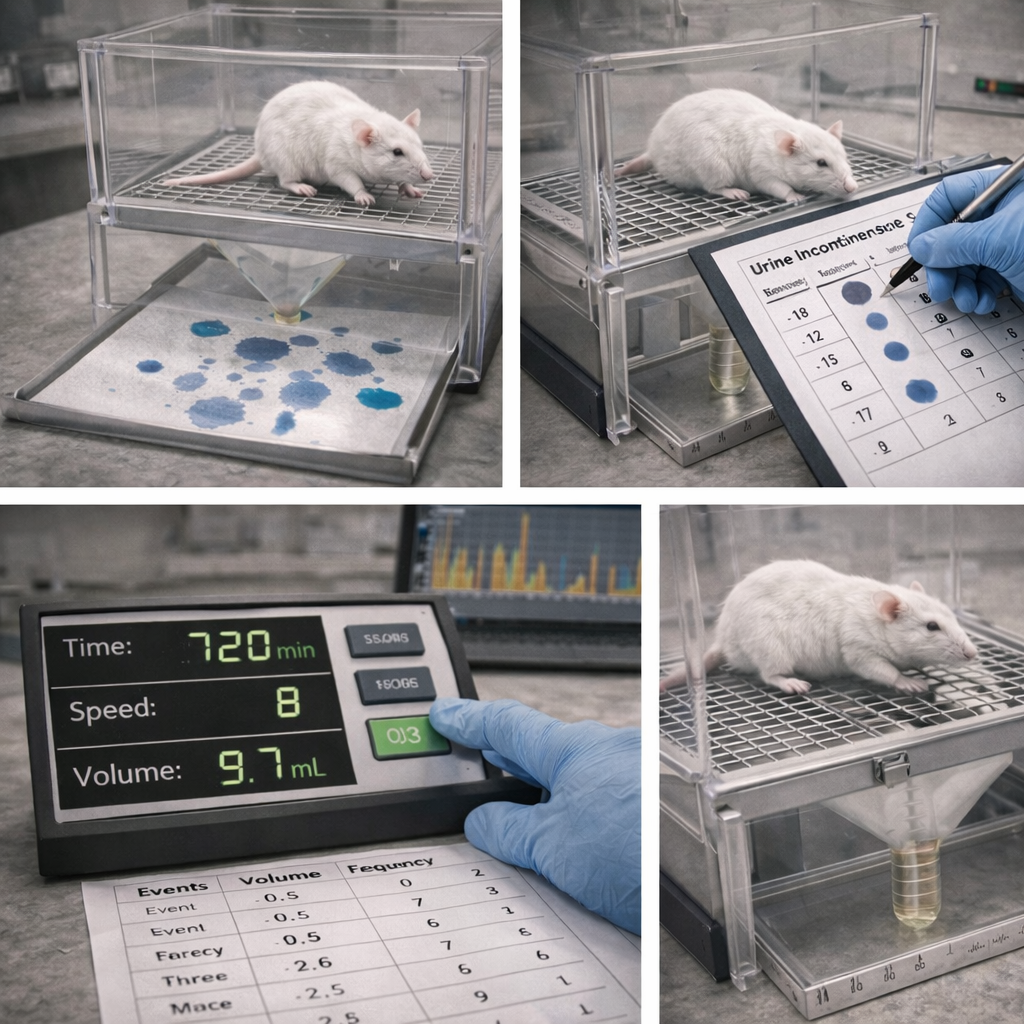
    This module evaluates lower urinary tract function and voiding behavior using quantitative and behavior-coupled assessments. By measuring voiding frequency, volume, and incontinence-related parameters, it enables precise characterization of bladder dysfunction. These assays are essential for urology, neuro-urology, and bladder disorder research. The resulting data provide highly translational functional endpoints for urinary system evaluation.

    Tests:

    • Voiding Spot Assay
    • Cystometry-Coupled Behavioral Assessment
    • Frequency–Volume Recording
    • Incontinence / Dribbling Scoring

    This module evaluates lower urinary tract function and voiding behavior using quantitative and behavior-coupled assessments. By measuring voiding frequency, volume, and incontinence-related parameters, it enables precise characterization of bladder dysfunction. These assays are essential for urology, neuro-urology, and bladder disorder research. The resulting data provide highly translational functional endpoints for urinary system evaluation.

    Tests:

    • Voiding Spot Assay
    • Cystometry-Coupled Behavioral Assessment
    • Frequency–Volume Recording
    • Incontinence / Dribbling Scoring

    16

    Cardiovascular & Stroke Functional Readouts

    Functional outcomes in cardiac and cerebrovascular models

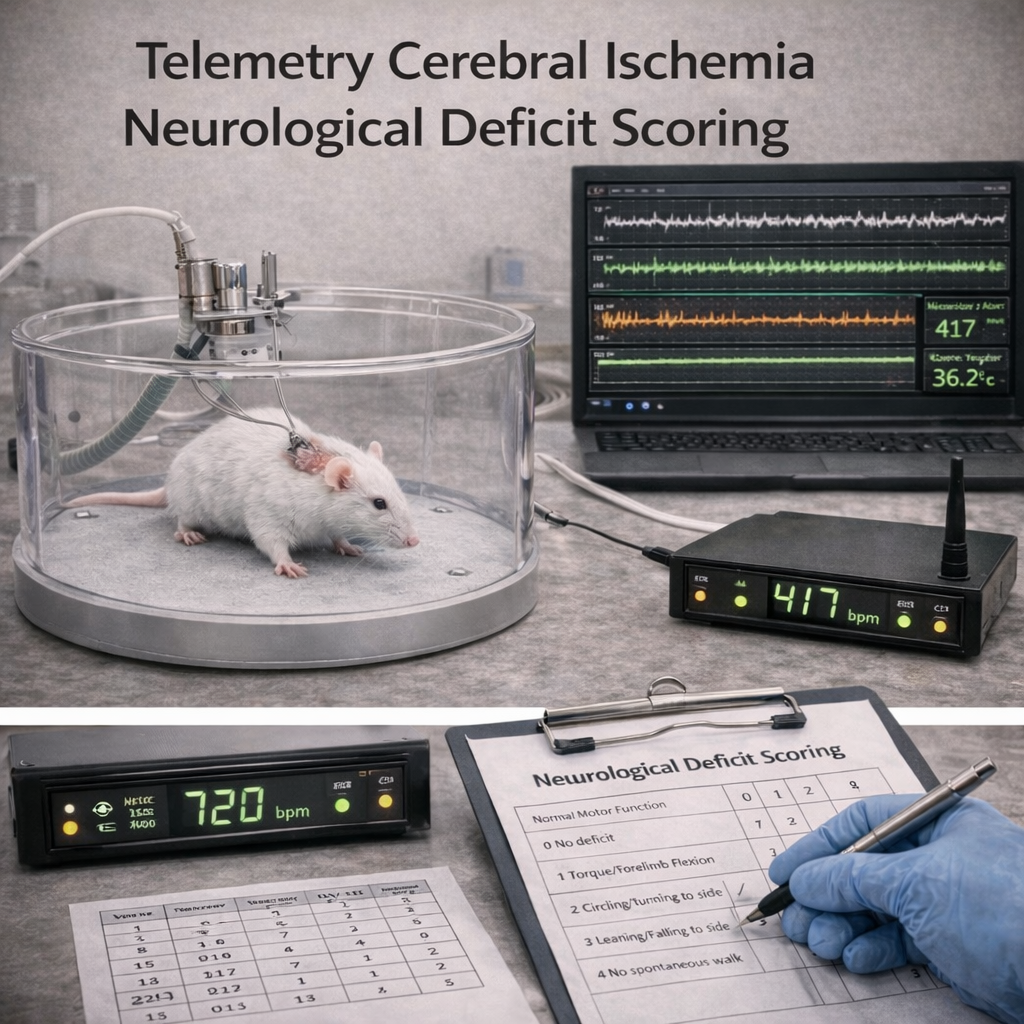
    This module assesses functional outcomes in cardiac and cerebrovascular disease models using integrated neurological, motor, and exercise-based readouts. By correlating post-stroke behavior, exercise tolerance, and telemetry-derived heart rate and blood pressure data, it enables precise evaluation of disease severity and recovery. These assays are essential for stroke, heart failure, and myocardial infarction research. The generated data provide highly translational cardiovascular and neurofunctional endpoints.

    Tests:

    • Neurological Deficit Score (Stroke Models)
    • Post-Stroke Functional Battery (Rotarod / Cylinder / Ladder)
    • Treadmill Exercise Tolerance (HF / MI Models)
    • Telemetry-Based Activity with HR / BP Correlation

    This module assesses functional outcomes in cardiac and cerebrovascular disease models using integrated neurological, motor, and exercise-based readouts. By correlating post-stroke behavior, exercise tolerance, and telemetry-derived heart rate and blood pressure data, it enables precise evaluation of disease severity and recovery. These assays are essential for stroke, heart failure, and myocardial infarction research. The generated data provide highly translational cardiovascular and neurofunctional endpoints.

    Tests:

    • Neurological Deficit Score (Stroke Models)
    • Post-Stroke Functional Battery (Rotarod / Cylinder / Ladder)
    • Treadmill Exercise Tolerance (HF / MI Models)
    • Telemetry-Based Activity with HR / BP Correlation

    17

    Wound Healing & Regenerative Functional Readouts

    Functional recovery following tissue injury and regeneration

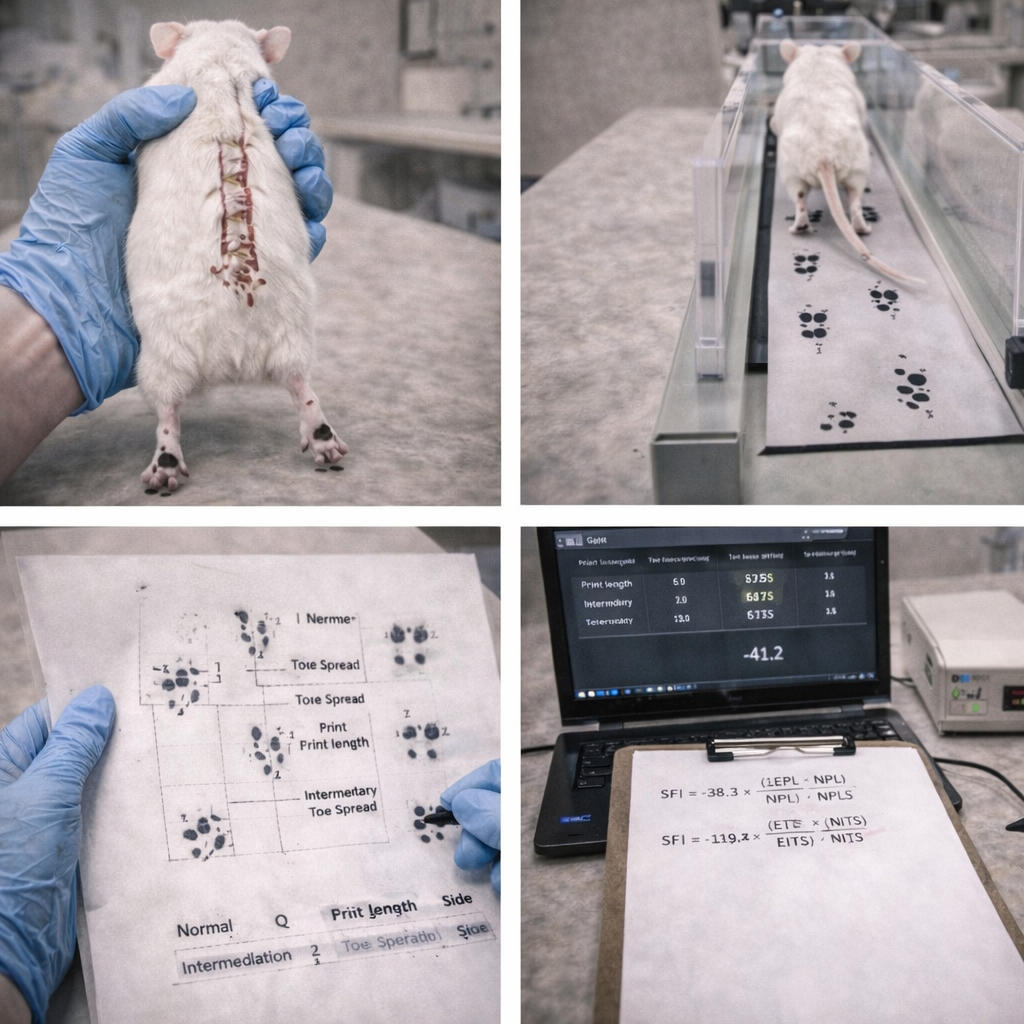
    This module evaluates functional recovery following tissue injury and regenerative interventions using quantitative and performance-based assessments. By measuring wound closure dynamics, limb function, gait restoration, and sciatic nerve recovery, it enables precise monitoring of regenerative outcomes. These assays are essential for regenerative medicine, tissue repair, and nerve injury studies. The resulting data provide highly translational functional endpoints for recovery and regeneration research.

    Tests:

    • Wound Closure Rate (Planimetry)
    • Limb Use Score (Ischemic Limb / Nerve Injury)
    • Post-Injury Gait Analysis
    • Functional Recovery Scores
    • Sciatic Functional Index (SFI)

    This module evaluates functional recovery following tissue injury and regenerative interventions using quantitative and performance-based assessments. By measuring wound closure dynamics, limb function, gait restoration, and sciatic nerve recovery, it enables precise monitoring of regenerative outcomes. These assays are essential for regenerative medicine, tissue repair, and nerve injury studies. The resulting data provide highly translational functional endpoints for recovery and regeneration research.

    Tests:

    • Wound Closure Rate (Planimetry)
    • Limb Use Score (Ischemic Limb / Nerve Injury)
    • Post-Injury Gait Analysis
    • Functional Recovery Scores
    • Sciatic Functional Index (SFI)
    This website uses cookies to improve your web experience.